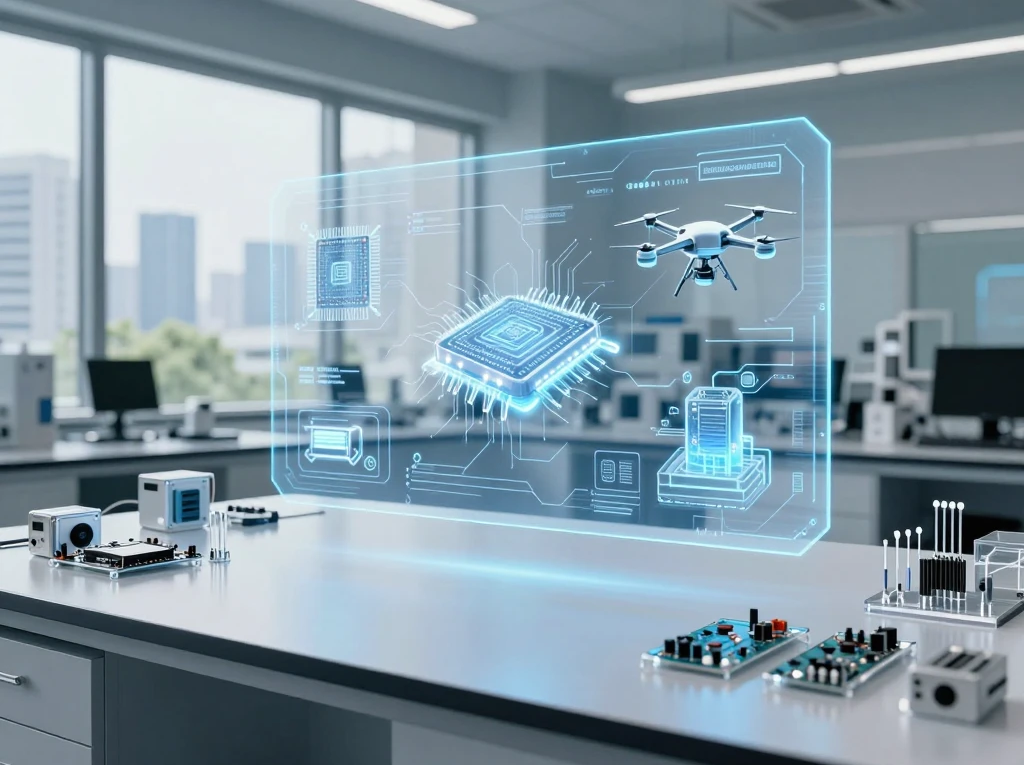
Revolutionary Emerging Technologies of the Future
Introduction
Technology is continuously evolving and changing the way people live, work, communicate, and solve problems. From smartphones and cloud computing to artificial intelligence and automation, technological advancements have transformed modern society. Today, a new generation of revolutionary emerging technologies is shaping the future by creating smarter systems, improving efficiency, and opening new possibilities across industries.
Emerging technologies are innovative solutions that are still developing but have the potential to create significant impacts in the coming years. These technologies include artificial intelligence, quantum computing, blockchain, robotics, biotechnology, Internet of Things (IoT), augmented reality, and advanced automation.
Organizations, governments, and researchers around the world are investing heavily in these technologies to improve productivity, solve complex challenges, and build a more connected future. This article explores the most revolutionary emerging technologies of the future, their applications, benefits, challenges, and their expected impact on society.
What Are Emerging Technologies?
Emerging technologies are new or rapidly developing technologies that have the potential to significantly influence industries, economies, and daily life. Unlike traditional technologies, emerging technologies introduce innovative approaches and create new opportunities.
Examples of emerging technologies include:
- Artificial Intelligence (AI)
- Machine Learning (ML)
- Quantum Computing
- Blockchain Technology
- Internet of Things (IoT)
- Robotics and Automation
- Biotechnology
- Augmented Reality (AR) and Virtual Reality (VR)
- Edge Computing
- Renewable Energy Technologies
These technologies are expected to play a major role in shaping the future of humanity.
1. Artificial Intelligence and Machine Learning
Artificial Intelligence (AI) is one of the most revolutionary technologies of the modern era. AI enables machines to perform tasks that normally require human intelligence, such as learning, problem-solving, decision-making, and language understanding.
Machine Learning, a branch of AI, allows systems to learn from data and improve performance without being explicitly programmed.
Future Applications of AI
AI will transform many industries, including:
- Healthcare diagnosis
- Autonomous vehicles
- Smart assistants
- Fraud detection
- Personalized recommendations
- Automated business processes
Benefits of AI
- Faster decision-making
- Improved productivity
- Reduced human errors
- Advanced problem-solving
- Better customer experiences
AI will continue becoming more powerful and integrated into everyday life.
2. Quantum Computing
Quantum computing is an advanced technology that uses quantum mechanics principles to perform calculations at extremely high speeds.
Traditional computers use bits represented as 0 or 1, while quantum computers use quantum bits (qubits), allowing them to process complex problems more efficiently.
Potential Applications of Quantum Computing
Quantum computing may revolutionize:
- Medical research
- Drug discovery
- Financial modeling
- Climate research
- Cybersecurity
- Scientific simulations
Although still developing, quantum computing has the potential to solve problems that are beyond the capabilities of current computers.
3. Internet of Things (IoT)
The Internet of Things connects physical devices to the internet, allowing them to collect and exchange data. Smart devices, sensors, vehicles, and home systems are examples of IoT technology.
Future Impact of IoT
IoT will support:
- Smart homes
- Smart cities
- Connected vehicles
- Industrial automation
- Smart healthcare systems
- Agriculture monitoring
Benefits of IoT
- Real-time monitoring
- Improved efficiency
- Automated processes
- Better resource management
- Enhanced user experiences
As connectivity improves, billions of devices will become interconnected worldwide.
4. Blockchain Technology
Blockchain is a decentralized digital technology that securely records transactions across multiple systems. It is best known as the technology behind cryptocurrencies but has applications beyond digital currencies.
Future Applications of Blockchain
Blockchain can improve:
- Digital identity management
- Supply chain tracking
- Financial transactions
- Healthcare records
- Data security
- Smart contracts
Benefits of Blockchain
- Increased transparency
- Improved security
- Reduced fraud
- Decentralized control
- Faster transactions
Blockchain is expected to influence many industries by creating more secure and trustworthy digital systems.
5. Robotics and Automation
Robotics and automation are transforming industries by enabling machines to perform tasks with minimal human involvement.
Modern robots are becoming more intelligent, flexible, and capable of working alongside humans.
Applications of Robotics
Robotics will impact:
- Manufacturing
- Healthcare
- Agriculture
- Space exploration
- Logistics
- Household services
Benefits of Automation
- Increased productivity
- Reduced operational costs
- Improved accuracy
- Enhanced workplace safety
- Faster production
Future robots will become essential partners in both professional and personal environments.
6. Augmented Reality and Virtual Reality
Augmented Reality (AR) and Virtual Reality (VR) are technologies that create immersive digital experiences.
AR adds digital information to the real world, while VR creates completely virtual environments.
Future Applications
These technologies will transform:
- Education
- Gaming
- Healthcare training
- Remote work
- Real estate
- Entertainment
Benefits
- Interactive learning
- Improved training experiences
- Virtual collaboration
- Enhanced customer engagement
AR and VR will change how people interact with digital content.
7. Biotechnology and Genetic Engineering
Biotechnology combines biology and technology to develop solutions for healthcare, agriculture, and environmental challenges.
Advancements in genetic engineering are creating new possibilities in medicine and biological research.
Future Applications
Biotechnology may improve:
- Disease treatment
- Personalized medicine
- Agricultural production
- Environmental protection
- Drug development
Benefits
- Improved healthcare outcomes
- Longer life expectancy
- Sustainable food production
- Advanced medical solutions
Biotechnology will play a crucial role in solving global health challenges.
8. Edge Computing
Edge computing processes data closer to where it is generated instead of sending all information to distant data centers.
This technology improves speed, reliability, and real-time decision-making.
Applications of Edge Computing
- Autonomous vehicles
- Smart cities
- Industrial systems
- Healthcare monitoring
- IoT devices
Benefits
- Faster processing
- Reduced network delays
- Improved data security
- Efficient resource usage
Edge computing will become increasingly important as connected devices continue growing.
9. Renewable Energy Technologies
Future technologies are also focusing on sustainable energy solutions. Renewable energy innovations aim to reduce dependence on fossil fuels and protect the environment.
Important developments include:
- Solar energy improvements
- Advanced batteries
- Smart energy systems
- Green hydrogen
- Electric transportation
These technologies will support a cleaner and more sustainable future.
10. 5G and Future Connectivity
Advanced communication networks are enabling faster and more reliable connections.
5G technology provides:
- Higher internet speeds
- Lower delays
- Better device connectivity
- Support for smart technologies
Future connectivity will support autonomous vehicles, smart cities, remote healthcare, and advanced digital services.
Impact of Emerging Technologies on Industries
Healthcare
Emerging technologies will improve diagnosis, treatment, medical research, and patient monitoring.
Education
Technology will create personalized learning experiences, virtual classrooms, and digital education platforms.
Business
Companies will use automation, AI, and analytics to improve productivity and decision-making.
Manufacturing
Smart factories will use robotics, IoT, and AI to optimize production.
Transportation
Autonomous vehicles and smart infrastructure will transform mobility.
Agriculture
Advanced technologies will support precision farming and sustainable food production.
Challenges of Emerging Technologies
Despite their benefits, emerging technologies also create challenges.
Security Risks
Advanced technologies may increase cybersecurity threats and data protection concerns.
Privacy Issues
Collecting and analyzing large amounts of personal data requires strong privacy protection.
High Development Costs
Many emerging technologies require significant investment and research.
Skills Gap
Organizations need professionals with advanced technical skills to implement new technologies.
Ethical Concerns
AI, biotechnology, and automation raise important questions about responsible use.
The Future of Emerging Technologies
The future will be defined by the combination of multiple advanced technologies. Artificial intelligence, robotics, quantum computing, biotechnology, and connectivity solutions will work together to create smarter and more efficient systems.
Businesses and individuals who adapt to these changes will have greater opportunities for growth and innovation.
Emerging technologies will not only improve existing processes but also create entirely new industries and possibilities.
Conclusion
Revolutionary emerging technologies are transforming the way humans live, work, and interact with the world. Technologies such as artificial intelligence, quantum computing, IoT, blockchain, robotics, biotechnology, and advanced connectivity are creating a future filled with innovation and opportunities.
Although challenges such as security, privacy, and ethical concerns remain, responsible development and adoption can help maximize the benefits of these technologies.
The future belongs to those who understand and embrace emerging technologies. As innovation continues to accelerate, these revolutionary advancements will shape a smarter, more connected, and more sustainable world.